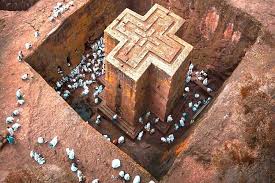
Lalibela Rock-Hewn Church
The Rock-Hewn Churches of Lalibela are among the most extraordinary religious and architectural monuments in the world. Located in the town of Lalibela, they consist of 11 medieval churches carved directly into solid volcanic rock during the late 12th and early 13th centuries under the reign of King Gebre Meskel Lalibela. The site was inscribed as a UNESCO World Heritage Site in 1978. Historical Background After the decline of the ancient Aksumite Empire, the Zagwe Dynasty established its capital at Roha, later renamed Lalibela after King Lalibela. According to Ethiopian tradition, the king wanted to create a "New Jerusalem" in Ethiopia because pilgrimages to the Holy Land had become difficult due to conflicts in the Middle East. The churches were carved from living rock rather than built stone by stone. Workers cut deep trenches around blocks of rock and then hollowed out the interiors, creating complete churches from a single mass of stone. The 11 Churches The churches are divided into two main groups connected by tunnels, trenches, and ceremonial pathways. Northern Group Biete Medhani Alem (House of the Savior of the World) Believed to be the largest monolithic church in the world. Biete Maryam (House of Mary) One of the oldest and most richly decorated churches. Biete Meskel (House of the Cross) Biete Denagel (House of the Virgins) Biete Golgotha Mikael Contains important religious relics and sacred traditions. Southern Group Biete Amanuel Considered one of the finest examples of Lalibela architecture. Biete Qeddus Mercoreus Biete Abba Libanos Biete Gabriel Raphael Biete Lehem (House of Holy Bread) Separate Church Biete Giyorgis (St. George's Church) The most famous church in Lalibela. Carved in the shape of a giant Greek cross. Often regarded as the masterpiece of the complex. Architecture and Engineering 7 What makes Lalibela unique is that the churches were: Carved top-down into bedrock. Created from a single block of stone (monolithic construction). Connected by underground passages and trenches. Equipped with drainage systems to protect against water damage. Decorated with carved windows, columns, arches, and religious artwork. Many visitors are surprised because the churches are largely below ground level, making them almost invisible until you stand at their edges. Religious Importance Lalibela is one of the holiest sites of the Ethiopian Orthodox Tewahedo Church and remains an active place of worship today. Thousands of pilgrims dressed in white traditional garments visit throughout the year, especially during the major Ethiopian Orthodox holidays. The churches have been a pilgrimage destination for more than 800 years and continue to play a central role in Ethiopian Christianity. UNESCO Recognition The site was among the first African locations placed on the UNESCO World Heritage List in 1978 because of its: Outstanding artistic achievement. Symbolic representation of Jerusalem. Exceptional testimony to medieval Ethiopian civilization. Challenges and Preservation The churches face several threats: Weathering and erosion. Water damage. Structural instability in some sections. Tourism pressure and nearby development. UNESCO and international conservation teams have installed protective shelters over some churches and continue restoration efforts. Interesting Facts Construction is traditionally said to have taken about 24 years. Some legends claim angels helped build the churches at night. The complex covers a large area interconnected by tunnels and trenches. Biete Medhani Alem is believed to be the largest monolithic church in the world. Biete Giyorgis is one of the most photographed landmarks in Africa. Lalibela is often considered one of Ethiopia's greatest historical achievements and is frequently compared to places such as Petra and Machu Picchu because of its remarkable rock-cut architecture and cultural significance.
- Guide and logistics (details on request)