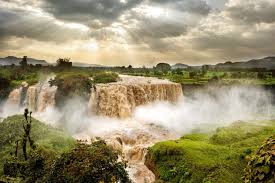
Blue Nile Falls
Includes
- The Blue Nile Falls, known locally as Tis Issat (meaning "Smoking Water" in Amharic), are one of Ethiopia's most famous natural attractions. The falls are located on the Blue Nile River about 30 km southeast of Bahir Dar, near Lake Tana, the source of the Blue Nile.
- Key Facts
- Local name: Tis Issat ("Smoking Water")
- River: Blue Nile
- Height: Approximately 37–45 meters (121–148 feet)
- Width: Can exceed 400 meters during the rainy season
- Location: Amhara Region, Ethiopia
- Distance from Addis Ababa: About 560 km by road
- Why It Is Famous
- The Blue Nile Falls are renowned for:
- Their impressive volume of water during the rainy season.
- The mist clouds that rise above the falls, giving them the name "Smoking Water."
- Rainbows that frequently appear in the spray.
- Their importance as one of Ethiopia's iconic natural landmarks.
- During peak rainy months (June–September), the falls become especially dramatic as water flow increases significantly.
- History and Exploration
- The falls have been known to local communities for centuries. In the 18th century, Scottish explorer James Bruce helped bring international attention to the region through his travels in search of the source of the Nile.
- Ecology and Wildlife
- 6
- The surrounding area contains:
- Riverine forests
- Diverse bird species
- Indigenous vegetation
- Agricultural landscapes cultivated by nearby communities
- The area is popular for nature walks and photography.
- Hydroelectric Impact
- A hydroelectric station upstream diverts some water from the river. As a result:
- Water flow over the falls can vary significantly.
- The falls are generally most spectacular during the rainy season.
- Dry-season visitors may see a reduced volume of water compared with historic levels.
- Tourism
- Visitors typically enjoy:
- Walking trails to viewpoints.
- Crossing a historic Portuguese-style bridge near the falls.
- Boat trips on sections of the Blue Nile.
- Viewing rainbows and mist formations.
- Experiencing local village culture.
- The visit usually takes 2–4 hours from Bahir Dar, making it a popular day trip.
- Cultural Importance
- The Blue Nile holds enormous significance because it contributes most of the water that eventually flows through Sudan and Egypt before reaching the Mediterranean Sea. The falls are therefore linked to one of the world's most historically important river systems.
- The Blue Nile Falls remain one of Ethiopia's most visited natural attractions, combining stunning scenery, historical significance, and a connection to the legendary Nile River.
Price on request
Contact us for a quote based on your dates, route, and group size.
Ready to book?
Send your dates and group size. We will reply quickly.
Request booking
Ask a question